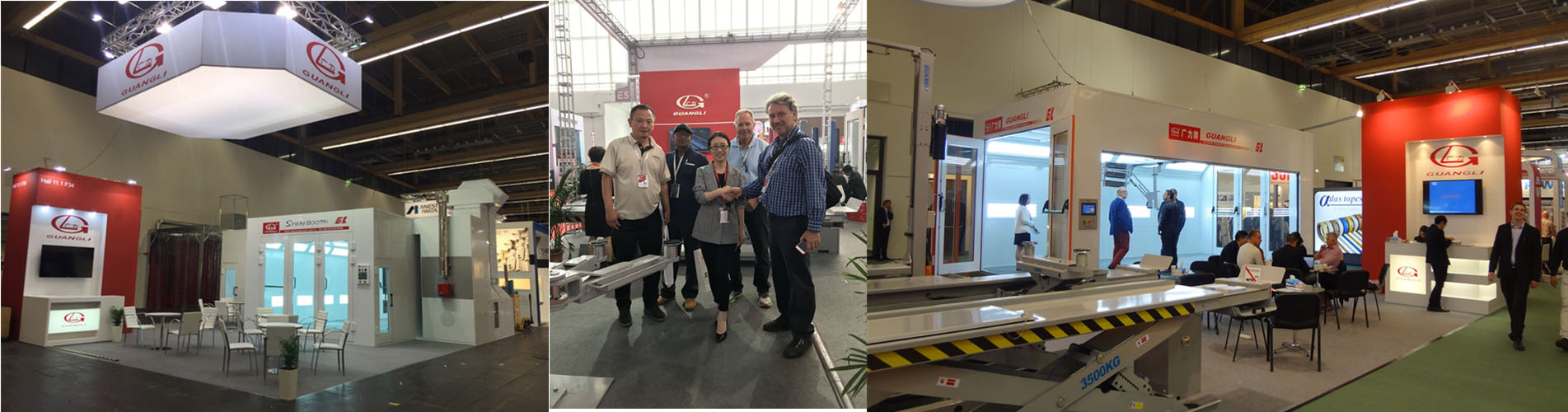
The automotive refinishing and industrial painting industries are placing greater emphasis on painting efficiency, environmental control, energy consumption, and consistent finish quality. As repair shops and manufacturers handle increasingly diverse vehicle models and production requirements, spray booth technology is also evolving to support more controlled and efficient painting processes.
In 2026, several trends are becoming increasingly important in the development and selection of spray booth systems.
Energy consumption has become an important consideration when businesses evaluate painting equipment. A spray booth requires controlled airflow, ventilation, lighting, and, in many applications, heating or baking. Therefore, booth design and airflow management can have a direct impact on operating costs.
Manufacturers are increasingly looking at optimized airflow, efficient ventilation systems, improved booth sealing, and better temperature control to reduce unnecessary energy consumption while maintaining suitable painting conditions.
For automotive repair facilities with a high volume of vehicles, improving booth operating efficiency can also help increase daily throughput without compromising finish quality.
Environmental requirements continue to influence the development of painting facilities. Paint spraying can generate overspray, VOCs, and other airborne pollutants, making effective ventilation and filtration important parts of a modern painting system.
Current spray booth solutions increasingly combine controlled airflow with suitable filtration and exhaust treatment technologies. Depending on the application and local requirements, additional VOC treatment equipment may also be integrated into the overall painting system.
This trend is particularly relevant for automotive body shops and industrial facilities looking to improve workplace conditions while meeting applicable environmental requirements.
A controlled painting environment is essential for achieving a consistent surface finish.
Uneven airflow, excessive dust, or poor ventilation can affect paint application and increase the possibility of defects or rework. For this reason, spray booth design is increasingly focused on maintaining stable airflow and creating a cleaner working environment.
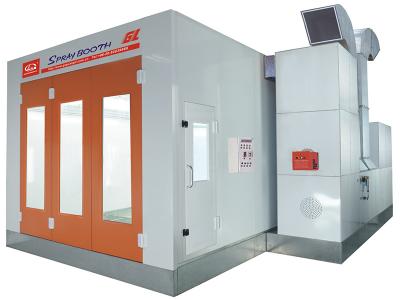
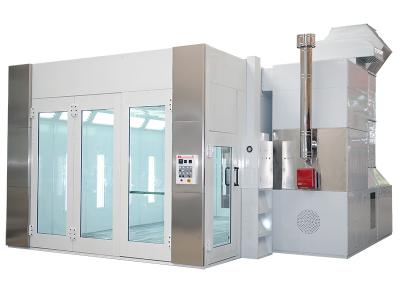
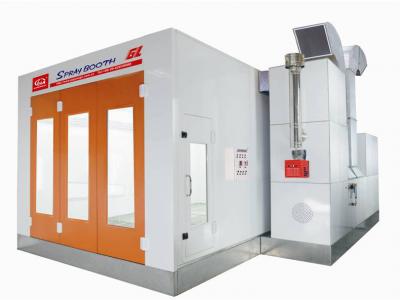
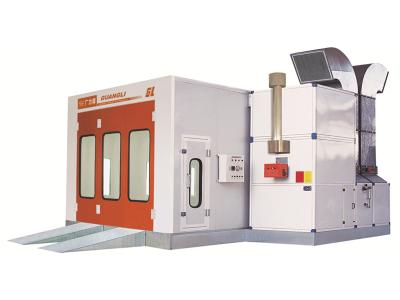
Different booth configurations, including downdraft, semi-downdraft, side-draft, and cross-draft systems, can be selected according to the vehicle size, workshop layout, painting process, and production requirements.
The right airflow configuration should therefore be considered as part of the overall booth design rather than as a single equipment specification.
Another important trend is the move from individual equipment to integrated automotive painting solutions.
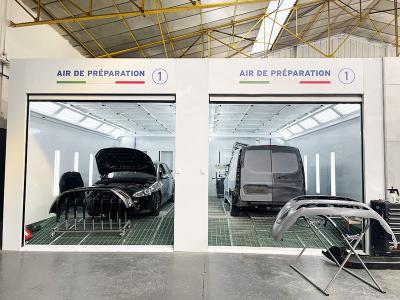
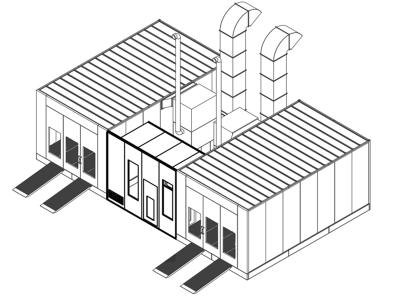
For high-volume repair operations, a complete workflow may include preparation areas, mixing rooms, spray booths, baking or curing areas, vehicle lifting equipment, ventilation systems, and environmental treatment equipment.
An integrated layout can help reduce unnecessary vehicle movement between different working areas and improve the overall workflow.
For example, a high-volume auto body repair facility may use preparation stations for sanding and priming before vehicles enter the spray booth for final painting and curing.
Automotive painting requirements vary considerably between passenger cars, commercial vehicles, buses, and trucks. As a result, spray booth manufacturers are providing more application-specific configurations.
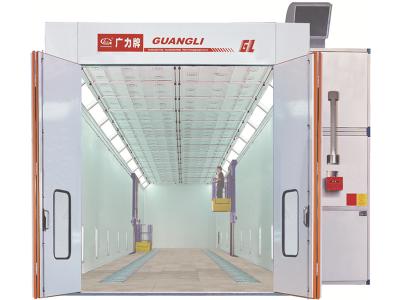
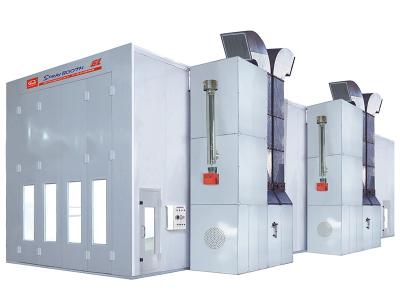
Passenger car spray booths are designed around the dimensions and workflow of conventional automotive repair. In contrast, truck and bus spray booths require larger working spaces and ventilation systems capable of handling significantly larger vehicles.
Open face paint booths and preparation booths can also be used for specific painting or preparation processes where a fully enclosed booth is not required.
The growing demand for customized booth dimensions and configurations reflects the different operating conditions of modern automotive workshops.
Automation is another area influencing the future development of painting equipment.
Modern coating operations are increasingly interested in more precise control of airflow, temperature, ventilation, lighting, and operating parameters. In larger facilities, automated systems can also support more consistent processes and help operators monitor equipment performance.
Digital monitoring and connected equipment may become increasingly useful for maintenance planning, energy management, and production optimization as automotive painting facilities become more automated.
For businesses planning to purchase or upgrade a spray booth in 2026, the decision is no longer based only on booth size and price.
A suitable spray booth should match the actual painting process and working environment of the facility.
Looking Ahead
The spray booth industry is moving toward more efficient, controlled, environmentally responsible, and application-specific solutions. Energy efficiency, airflow management, environmental treatment, integrated workshop layouts, and automation are expected to remain important areas of development.
For automotive repair shops and industrial painting facilities, selecting the right spray booth is increasingly becoming part of a broader strategy to improve painting quality, operational efficiency, and long-term equipment performance.

China largest manufacturer of spray booths,furniture paint booths and man lifts since 1994


 English
 français
 русский
 فارسی
فارسی español
 português
 العربية
 Indonesia
 Česky
Česky românesc
 български
 IPv6 network supported