An auto paint booth is a controlled enclosure designed to provide a cleaner, safer, and more consistent environment for automotive painting and drying. Instead of spraying paint in an open workshop, an automotive paint booth controls airflow, filters incoming and exhaust air, improves lighting, and can provide controlled heating for drying and curing.
For auto body shops, collision repair centers, vehicle manufacturers, and equipment distributors, understanding how a paint booth works is important when selecting the right equipment. The airflow system, filtration, heating system, booth design, and application requirements all affect painting quality and operating efficiency.
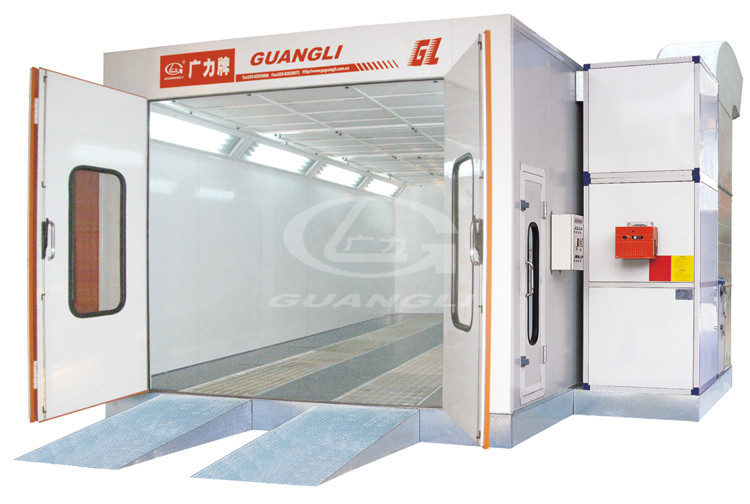
An auto paint booth is an enclosed workspace where paint is applied to vehicles or automotive components under controlled environmental conditions. It uses ventilation and filtration equipment to move air through the booth while helping control paint overspray, dust, fumes, and airborne particles.
Depending on the design, an automotive paint booth can also include a heating and drying system. This allows the same enclosure to support both paint application and curing processes, improving workflow for professional body shops.
Modern spray booths are available in different configurations, including cross-draft, semi-downdraft, side-draft, and full downdraft systems. The best option depends on the vehicle size, workshop layout, production volume, local requirements, and desired finishing quality.
The basic working principle is straightforward: clean air enters the booth through an intake system, moves across or around the vehicle, captures or carries away overspray and airborne contaminants, and then exits through an exhaust and filtration system.
The exact airflow direction depends on the booth design. During painting, the controlled airflow helps reduce the amount of dust and overspray that can settle on the vehicle surface. A well-designed airflow system also helps painters maintain a more consistent working environment.
In booths equipped with heating systems, the airflow can also be heated during the drying or baking stage. The temperature and airflow are controlled according to the booth design and the requirements of the coating system being used.
The process begins with air entering through an intake system. Intake filters remove airborne particles before the air reaches the painting area. This is important because dust and other contaminants can create surface defects during automotive refinishing.
The filtered air is distributed through the booth according to its airflow configuration. Some systems introduce air from the ceiling, while others use front or side intake arrangements.
For professional applications, the objective is to create a stable airflow pattern without unnecessary turbulence or dead-air areas.
Once clean air enters the booth, it moves through the painting area. The direction and speed of the airflow depend on the booth type.
In a cross-draft booth, air generally travels horizontally from the front or one side of the booth toward the exhaust side. A semi-downdraft system introduces air from the upper front area and directs it downward before exhausting it.
A downdraft paint booth uses a different principle. Clean air enters through the ceiling plenum and moves downward through the working area before being exhausted through the floor system. This airflow configuration is designed to provide a controlled spray environment for professional automotive refinishing.
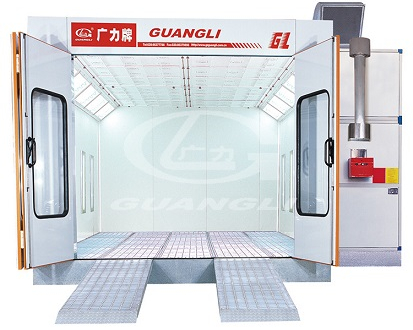
During spraying, not all paint reaches the vehicle surface. A portion becomes overspray and must be removed from the painting area. Controlled airflow carries airborne paint particles toward the exhaust system rather than allowing them to remain suspended around the vehicle.
This helps create a cleaner painting environment and reduces the possibility of overspray settling back onto freshly painted surfaces.
The exhaust system is therefore a critical component of an automotive paint booth. Its fans, filters, ducting, and exhaust configuration must be properly matched to the booth design and application.
Before exhaust air leaves the system, filtration helps capture paint particles and other contaminants. Different booth designs can use different types of filtration media depending on the application and required performance.
Regular filter maintenance is essential. As filters become loaded with paint particles and dust, airflow resistance can increase and booth performance may decline.
For replacement and maintenance requirements, buyers can review the available paint booth filters and select filtration solutions suitable for their equipment.
Many automotive paint booths combine spraying with a drying or baking function. After paint application, the booth can switch to a drying cycle in systems designed for this purpose.
During drying, the heating system raises the air temperature while the ventilation system continues to circulate and exhaust air according to the booth configuration. Controlled temperature and airflow can help shorten drying time and improve production efficiency.
The exact drying process should always follow the requirements of the paint or coating manufacturer and the specifications of the paint booth.
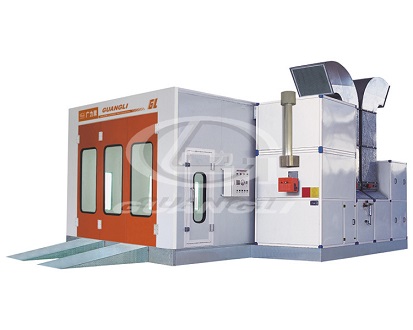
Different airflow configurations are available because automotive workshops have different space, budget, production, and finishing requirements.
For buyers comparing different configurations, it is important to consider the installation site as well as the expected painting results. A booth that works well for a small collision repair shop may not be the best solution for a high-volume automotive facility.
Airflow is one of the most important factors affecting paint booth performance. Poor airflow can create uneven conditions, allow overspray to remain in the booth, increase contamination, and negatively affect the final finish.
A properly designed system should provide consistent airflow across the working area while maintaining effective filtration and exhaust performance.
This is particularly important for professional body shops that need repeatable results across multiple vehicles. When selecting a booth, buyers should therefore evaluate airflow design rather than focusing only on booth dimensions or purchase price.
Not every workshop can use a standard-size booth. Vehicle dimensions, building structure, available floor space, production requirements, and local regulations can all affect the final design.
A custom spray booth can be designed around the customer's installation conditions and painting requirements. Customization may involve booth dimensions, airflow configuration, insulation, lighting, heating systems, exhaust arrangements, and other technical specifications. GZ Guangli states that its custom booth solutions can be tailored to automotive, furniture, and large industrial applications.
For large vehicles, a standard car booth may also be unsuitable. Bus, truck, trailer, and heavy-equipment applications require larger working areas and appropriately sized ventilation systems. In these cases, a truck spray booth can provide a more suitable solution.
The main advantage of a paint booth is environmental control. By controlling airflow, filtration, lighting, and, where applicable, temperature, the booth creates more consistent conditions than an open workshop.
Better lighting helps painters identify color and surface imperfections. Filtered incoming air reduces contamination. Controlled exhaust helps remove overspray, while appropriate drying systems can improve workflow efficiency.
For this reason, an automotive paint booth is not simply a room with fans. It is an integrated system in which airflow, filtration, exhaust, heating, lighting, and enclosure design work together.
When purchasing an auto paint booth for a body shop or distribution project, buyers should evaluate several factors before making a decision:
An auto paint booth works by creating a controlled environment for vehicle painting through coordinated air intake, filtration, airflow, exhaust, and, when required, heating and drying. Understanding this process makes it easier for workshops, distributors, and project buyers to compare different booth configurations.
GZ Guangli provides automotive paint booths in different airflow configurations and supports customized booth solutions for different vehicle sizes, workshop layouts, and application requirements. Its product range includes automotive booths, downdraft systems, truck and bus booths, preparation stations, and related equipment.
If you are sourcing an automotive paint booth for a new workshop, replacement project, or large-scale body repair facility, compare the airflow system, filtration, heating, dimensions, and customization options before placing an order.
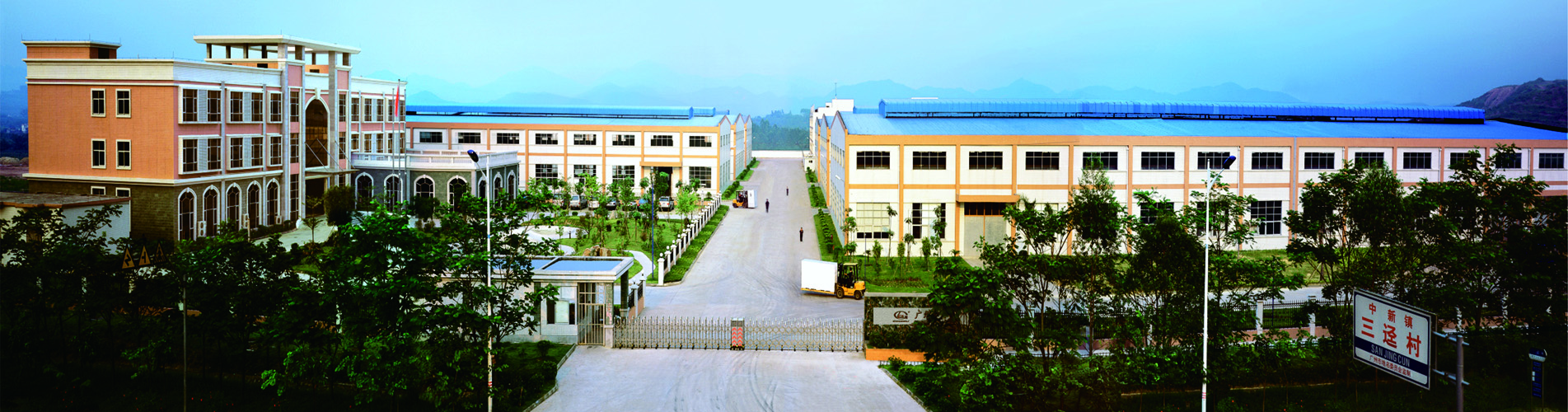
China largest manufacturer of spray booths,furniture paint booths and man lifts since 1994


 English
 français
 русский
 فارسی
فارسی español
 português
 العربية
 Indonesia
 Česky
Česky românesc
 български
 IPv6 network supported