English
 français
 русский
 فارسی
 español
 português
 العربية
 Indonesia
 Česky
 românesc
 български
Five advantages define an efficient car spray booth:
|
Advantage |
What You Gain |
|---|---|
|
Finish quality |
Controlled airflow keeps dust off wet paint |
|
Productivity |
Faster drying and quicker cycles |
|
Cost savings |
Less paint waste, lower operating costs |
|
Compliance |
Captured VOCs and pollutants |
|
Safety |
Overspray and vapors removed from the workspace |
An efficient automotive paint booth controls air, heat, and filtration as one system. A less efficient unit leaves those variables to chance. Treat efficiency as a business decision, not a technical luxury.
GZ Guangli builds professional grade booths with these advantages designed in.
Here is how each one pays off in daily operation.
Key Takeaways
- An efficient car spray booth keeps dust off wet paint and helps you get a flawless finish every time.
- You can speed up your work because efficient booths dry cars faster and reduce the need to repaint.
- Save money on energy and paint with an efficient booth that cuts waste and lowers your bills.
- Stay compliant with environmental rules by using a booth that captures harmful fumes and meets clean air standards.
- Protect your health and safety with a booth that removes dangerous vapors and reduces fire risks.
Better Finishes With an Efficient Car Spray Booth
Consistent Airflow and Filtration
An efficient car spray booth moves air in a steady, predictable pattern. Downdraft booths push clean air from the ceiling to the floor. This design carries overspray away from the vehicle before particles can settle on wet paint. Turbulent or unbalanced airflow does the opposite. Paint particles bounce back, circulate, and land as dust nibs or dry spray. Even small variances can force a full repaint.
Advanced filtration systems work alongside airflow management to protect the surface. Air passes through pre-filters that catch coarse debris, then secondary pocket filters, then HEPA media that traps 99.97% of particles as small as 0.3 microns. This staged approach creates a dust-free environment for every coat. GZ Guangli designs its automotive paint booth filtration around this progressive layout, so each stage shields the next and airflow stays even across the work area.
Temperature and Humidity Control
A spray booth oven governs heat and moisture with precision. Ideal booth temperature sits between 68°F and 77°F for proper paint flow, adhesion, and drying. Cold conditions thicken paint and stretch drying times. Excess heat thins the coating and causes runs on vertical panels. Humidity matters just as much. Dry air pulls solvents out too fast and dulls the gloss. Humid air slows evaporation and leaves the film vulnerable to dust.
Bake cycles typically run 140°F to 180°F and cut cure time by hours. PPG guidance notes that urethane coatings should not be applied below 55°F. GZ Guangli builds spray and bake modes into its booths, with integrated drying and curing systems that hold the setpoint steady. The result is uniform coverage, stronger gloss, and improved finish quality on every job. This level of control over airflow, temperature, and hazardous exhaust separates a high-performance paint booth from a basic enclosure. Shops that run paint spray booths with this discipline see fewer defects and faster release times.
Higher Efficiency and Faster Turnaround
Shorter Cycle Runtimes
An efficient car spray booth turns each job around in less time. Steady airflow lets your technicians lay down coats with greater precision. They spend less time chasing dust nibs and more time on coverage. Controlled drying then shortens booth occupancy per job. A bake cycle brings the coating to a full cure in hours instead of overnight, so the vehicle leaves the bay sooner and the next one rolls in.
You gain faster turnaround without cutting corners. The same booth that speeds up drying also protects the finish, so speed and quality rise together. That combination is the heart of efficiency in any automotive paint booth.
Less Rework, More Throughput
Rework is the hidden cost of a slow booth. Every dust defect or uneven coat sends a vehicle back through the cycle. A clean, controlled environment cuts those returns. Your team finishes more vehicles in the same shift, and workflow efficiency climbs.
Portable paint booths offer flexibility and cleaner workspaces for shops with changing workloads. They suit setups where job volume shifts or floor space is tight. Fixed booths serve high-volume shops that need a dedicated bay. Neither option is superior; each fits a different shop profile. Many automotive paint booth buyers pair both to match demand.
Integrated drying and curing systems tie these gains together. They hold the setpoint steady, so every job follows the same reliable path. Shops that run paint spray booths this way see fewer surprises and steadier output. The result is a predictable rhythm across your whole operation.
Cost Savings From a Paint Spray Booth
Lower Energy and Material Waste
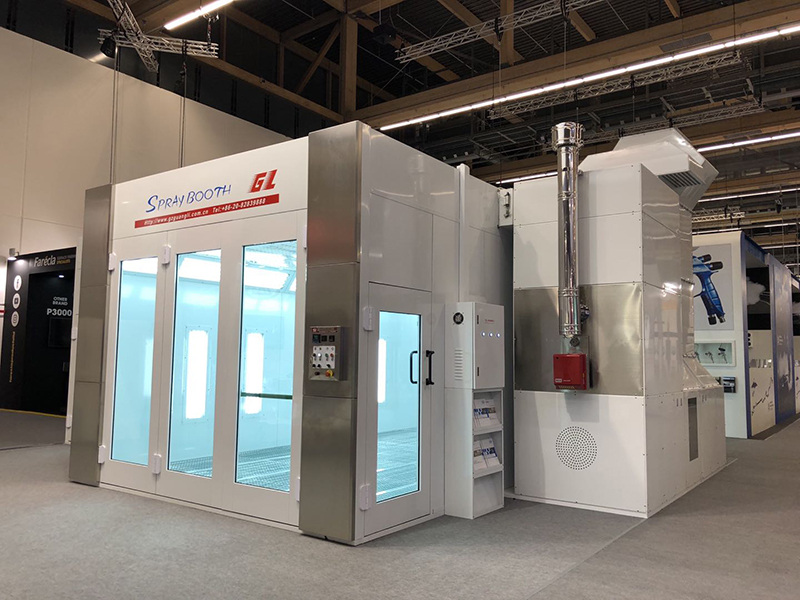
An energy efficient paint spray booth can lower operational costs. Double-skin insulated walls add a second steel layer with insulation between the panels. This design traps heat inside the booth instead of letting it escape into the shop. Your facility's HVAC system does not have to compensate as heavily, so overall energy consumption drops. Paint spray booths without insulation lose that heat continuously. Heated make-up air units push the savings further. Modern units can recover heat from the exhaust stream and condition only the air that is actually needed.
|
Efficiency Mechanism |
How It Contributes to Energy Efficiency |
|---|---|
|
Direct-fired burner with 30:1 turndown |
All heat enters the airstream; the flame modulates to outdoor temperature swings |
|
Variable Air Volume with VFD |
Adjusts airflow to changing conditions and eliminates power spikes |
|
80/20 recirculating system |
Draws at least 20% outside air and up to 80% recirculated air |
|
Recirculating cure-only unit |
Reuses heated air so the heating unit needs less energy |
Material waste offers another savings channel. Adjustable nozzles and improved operator technique reduce overspray. High-transfer-efficiency coatings improve coverage and cut the number of coats. A structured waste management system supports recycling and proper disposal. Automotive spray booths that track paint usage data refine their technique over time.
Longer Filter Life, Less Downtime
High-efficiency filtration extends service intervals. Multi-layered filters capture more particles without clogging quickly. They hold airflow consistent across the booth.
Do high-efficiency filters last longer?
Yes. High-capacity or multi-layered filters are designed to capture more particles without clogging quickly, offering longer service intervals and better airflow consistency.
GZ Guangli builds its automotive paint booth filtration around this principle. Durable filter housings and staged media keep your maintenance schedule predictable. Fewer filter changes mean less downtime and lower replacement costs. Your automotive paint booth stays in service longer, and your team spends more time painting.
Shops that compare car spray booth options often overlook filter economics. An efficient car spray booth turns filtration into a cost advantage rather than a recurring expense. The right automotive paint booth design pays back on every job.
Compliance for Your Automotive Paint Booth
Emission Control and Filtration Standards
Environmental rules treat an automotive paint booth as a controlled emission source. The EPA's NESHAP 6H rule governs filtration efficiency, spray equipment type, and painter training for auto body refinishing. Your booth must capture paint overspray at 98% collection efficiency or better. Spray guns must be HVLP, electrostatic, or an equivalent low-emission technology. Four overlapping systems apply to most shops:
- EPA's NESHAP 6H rule
- OSHA's spray booth standards
- State air district rules
- Federal hazardous waste regulations
Some states add VOC limits on top of the federal rule. Check both levels before you buy. Thermal oxidizers, VOC filtration, and water-based coatings help automotive spray booths meet these limits. Proper ventilation keeps the enclosure under negative pressure, so fumes leave through the stack instead of the shop floor.
Inspection Readiness
Documented filtration and controlled processes make inspections predictable. Keep signed daily shift check sheets current. File your safety data sheets, risk assessments, maintenance logs, and training records where an inspector can reach them. Log every filter change with the date, run hours, and pressure-drop reading. These records build an audit trail and help you spot recurring issues early.
Replace filters proactively, before airflow loss becomes detectable. A written schedule turns maintenance into a verifiable process. Inspection reports should capture measured exhaust air velocities, motor amp draws, and burner firing rates, tracked year over year. Record corrective actions with the completion date and the name of the person who re-verified the system. This discipline supports safety regulations and keeps your automotive paint booth audit-ready. Shops that document paint spray booths this way spend less time preparing for inspections and more time painting. A well-run automotive paint booth becomes easier to verify with each passing year.
Safety Gains From an Efficient Paint Booth
Cleaner Air for Technicians
Your technicians breathe the air inside the booth all shift. Mechanical ventilation continuously exhausts air during operation and keeps VOC vapors at the required low flammable level. That constant exchange protects the people holding the spray gun.
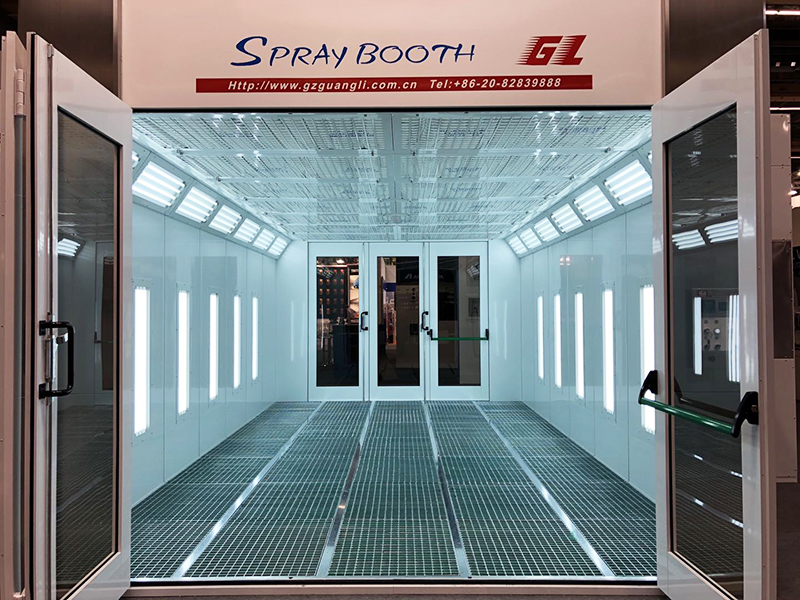
Uniform airflow along the exhaust slot eliminates air whirls and prevents dead air pockets. Every zone of the cabin receives the same steady sweep of filtered air. Mechanical ventilation also captures overspray immediately and collects it safely. Hazardous concentrations of overspray and vapors create unsafe health conditions when workers inhale contaminated air. An efficient car spray booth is designed to prevent that buildup before it starts. The same airflow that supports finish quality also supports a healthier workplace, stronger productivity, and fire prevention.
Lower Fire and Contamination Risk
An enclosed, well-filtered booth separates the painting process from the rest of your shop. Pressurized downdraft airflow holds positive cabin pressure, so outside contaminants cannot slip in through seams or open doors. Air enters through a ceiling plenum, flows down over the vehicle, and exits through a filtered floor pit. This pattern controls overspray and dust instead of letting them drift.
|
Mechanism |
How It Reduces Contamination Risk |
|---|---|
|
Pressurized downdraft airflow |
Positive pressure blocks outside particles; vertical flow carries overspray to the floor pit |
|
Intake and exhaust filtration |
Filtered supply air shields the coating operation from foreign particles |
|
Dedicated mix rooms with ventilation |
Filtered outside air removes dust and pushes vapors into an exhaust plenum |
|
Limiting non-painting activities |
Keeps sanding dust and stored items out of the spray zone |
Open and DIY setups lack these controls, so overspray and dust settle wherever they land. A dedicated paint booth contains both. Regular filter changes keep protection strong, and hazardous fume extraction moves vapors safely outdoors. Shops running automotive spray booths with this discipline cut fire risk and contamination together. Every automotive paint booth from GZ Guangli is built around these safeguards, and each paint spray booth in the lineup pairs filtration with controlled exhaust. That combination turns safety into a daily habit rather than an afterthought.
An efficient car spray booth pays you back five ways: cleaner finishes, faster turnaround, lower operating costs, easier compliance, and safer working conditions. Each gain reinforces the others. You get a better result and a stronger bottom line from the same bay.
Treat this equipment as an investment, not a purchase. Every job that leaves the booth cured and defect-free returns value. That return compounds across shifts, seasons, and years of production.
Ready to match a booth to your shop? Talk to GZ Guangli about your floor space, workload, and coating types. The team will help you specify an automotive paint booth that delivers real efficiency from day one. Your next automotive paint booth should earn its keep on every vehicle.
FAQ
Which booth type suits my shop best?
Match the booth to your workload. A fixed automotive paint booth serves high-volume shops that need a dedicated bay. A portable unit fits shops with shifting volume or tight floor space. Many owners run both. Neither type is superior; each fits a different shop profile.
What temperature should the booth hold?
Hold spray conditions between 68°F and 77°F for proper paint flow and adhesion. Bake cycles typically run 140°F to 180°F. Avoid applying urethane coatings below 55°F. Steady setpoints give you uniform coverage and a stronger gloss on every job.
How often should I change filters?
Follow a written schedule and log each change with the date, run hours, and pressure-drop reading. Replace filters before airflow loss becomes detectable. Staged media in a well-built automotive paint booth holds airflow consistent and stretches service intervals, so downtime stays low.
Do I need a bake cycle?
A bake cycle cures coatings in hours instead of overnight. The vehicle leaves the bay sooner, and the next job rolls in. Faster release times raise throughput without sacrificing finish quality. Most automotive spray booths from GZ Guangli include spray and bake modes as standard.
What should I check before an inspection?
Keep daily shift check sheets, safety data sheets, maintenance logs, and training records current. Verify exhaust air velocity and pressure-drop readings stay within your documented schedule. Document corrective actions with completion dates. This discipline keeps any automotive paint booth audit-ready year round.


 IPv6 network supported