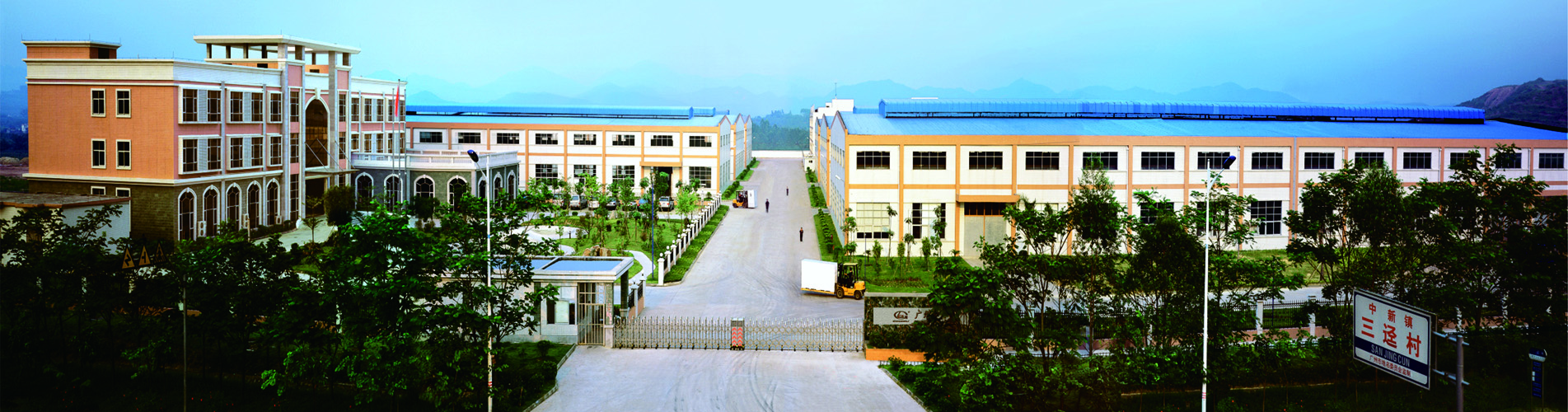
Imagine achieving a flawless paint finish in half the time while improving safety and cutting costs. A high temperature car spray booth delivers exactly that. This advanced paint booth accelerates drying cycles, but the benefits extend far beyond speed. You gain superior coating adhesion, consistent results across every job, and compliance with industry standards. Leading manufacturers trust these systems for automotive refinish operations. In the automotive repair industry, this technology sets the benchmark for quality. Guangli, a trusted name, builds booths that major automakers rely on daily. Their controlled environments eliminate variables that cause defects, so you deliver professional results every time. Investing in this technology transforms your workshop's efficiency and reputation.
A high temperature car spray booth delivers consistent results that ordinary booths cannot match. The controlled environment eliminates the variables that ruin paint jobs. You gain a professional finish every time, without guesswork or repeated attempts.
Temperature consistency directly determines how your coating cures. When you maintain proper temperature settings, the paint hardens evenly across every panel. Overbaking makes the coating too hard and brittle, which reduces flexibility. Underbaking leaves the surface too soft and overly flexible. Both conditions ruin the final appearance.
|
Condition |
Effect on Hardness |
Effect on Gloss |
|---|---|---|
|
Overbaking |
Too hard, lacks flexibility |
Gloss decreases |
|
Underbaking |
Too soft, too flexible |
Gloss becomes too high |
Without precise temperature control, you encounter common defects. Soft or tacky surfaces appear after curing. Poor gloss development leaves the finish dull. Orange peel texture mars the surface. Uneven coating appearance forces you to redo the job. These problems increase rework rates and waste valuable time.
Guangli's high-quality auto paint booth solves this challenge. The modular construction and edge-banded panels maintain stable temperature control throughout the workspace. You set the temperature once, and the booth holds it steadily. This consistency ensures every automotive refinish job meets the same high standard.
Airflow design plays an equally critical role in paint quality. Advanced ventilation systems channel overspray away from the painted surface. This controlled movement prevents contaminants from settling on your fresh coating. You achieve dust-free finishes that impress your customers.
Different booth designs offer varying levels of airflow precision:
The airflow parameters matter just as much as the design. Proper air velocity maintains laminar flow, which ensures even solvent evaporation. Uniform airflow prevents tiger stripes and other defects. Downdraft systems pull contaminants downward, away from the vehicle. This precision matters for custom and specialty finishes.
|
Airflow Parameter |
Specification |
Impact on Paint Surface Quality |
|---|---|---|
|
Air Velocity (Work Zone) |
0.3–0.5 m/s |
Maintains tightly controlled laminar flow, ensuring even solvent evaporation |
|
Airflow Uniformity |
Laminar flow (Reynolds number < 2000) |
Uneven flow causes Coandă effect disturbances, pulling spray toward sidewalls |
|
Airflow Direction |
Downward or across the painted object |
Ensures even distribution of paint particles, promoting an even film build |
Guangli's paint booth incorporates these principles into every unit. The advanced ventilation systems remove overspray efficiently. You work in a clean environment that supports flawless results. The combination of stable temperature and optimized airflow gives you the confidence to deliver exceptional automotive paint finishes.
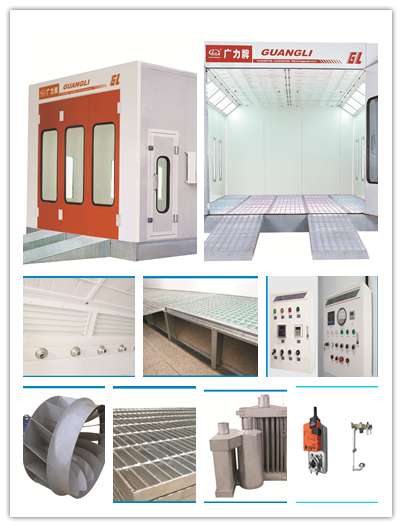
High temperatures speed up the chemical cross-linking process in your coating. The reaction follows a clear sequence:
Heat acts as a trigger. In self-crosslinking polymer dispersions, the crosslinking agent does not react immediately upon mixing.
The introduction of thermal energy activates the crosslinker.
Once activated, the crosslinker reacts with different functional groups on the polymer backbone, forming a dense, crosslinked film.
The precision of your temperature settings determines how quickly this process completes. You set the proper temperature settings, and the booth maintains heat consistently throughout the cure cycle. This thermal acceleration gives you faster solvent evaporation and quicker chemical reactions.
Elevated temperatures from curing lamps directly facilitate cross-linking and curing reactions within the coating. This results in improved adhesion and structural integrity, reducing the likelihood of surface defects such as streaks and imperfections.
The throughput gains are significant. According to industry data, a configuration using one prep station and one paint booth with accelerated curing systems yields a throughput increase of up to 80 percent. This enables processing of up to 12 vehicles per day. For automotive refinishing operations, this speed advantage translates directly to higher revenue. Major automotive brands trust Guangli equipment for their refinish work. The proper heat containment in these booths also reduces energy consumption.
Contaminants directly increase your drying time and ruin finish quality. Even the smallest specs of dust can ruin a high-dollar paint job. Poorly maintained spray guns or improperly installed booths introduce contaminants that require complete repainting.
Even the smallest specs of dust can ruin a high-dollar paint job. Poorly maintained spray guns or improperly installed booths can introduce contaminants that require complete repainting, directly compromising finish quality and increasing production time.
Common sources of contamination include:
Sanding dust left on panels works into the paint, causing delamination.
Poor spray gun maintenance leads to mottling, striping, or poor coverage.
Negative booth pressure pulls external dust into the paint through seals.
Improper painter attire allows dirt to fall into the paint, causing fisheyes.
Contamination directly affects drying time:
Clean, dry air is critical for proper drying times. A high temperature car spray booth seals out external contaminants. You achieve dust-free finishes consistently. This climate-controlled curing environment ensures every refinish job meets the same high standard. The advanced filtration systems remove particles before they reach your coating. This eliminates delays from rework and keeps your refinish workflow efficient.
A high-quality auto paint booth protects you and your workers from serious hazards. The controlled environment minimizes fire risks and limits exposure to harmful volatile organic compounds (VOCs). You gain peace of mind knowing your operation meets strict safety regulations.
Advanced ventilation systems continuously circulate and exhaust air inside the booth. This prevents VOCs from reaching dangerous concentrations. You avoid the long-term health effects of chemical exposure while maintaining a safe workspace.
A spray booth must have downdraft or crossdraft airflow systems to remove toxic fumes and maintain clean air. This prevents operator exposure and ensures a consistent finish.
Activated carbon filters absorb toxic fumes before air vents outside. Air makeup units replace exhausted air with fresh, conditioned air, maintaining consistent airflow. Exhaust stacks funnel purified air away from the workspace. These components work together to keep your breathing zone clean.
The airflow rate matters for safety. HSE guidelines recommend 0.3–0.5 m/s across the worker's breathing zone. This velocity prevents flammable vapor accumulation. Your high temperature car spray booth maintains this airflow while curing coatings at elevated temperature settings.
OSHA regulations define specific requirements for spray booth ventilation and fire suppression. You must comply with these standards to operate legally.
NFPA 33 requires ventilation that maintains flammable vapor concentration below a safe level, as defined by the standard. This standard protects your facility from fire and explosion risks.
NFPA 33 and the International Fire Code both require that the ventilation rate shall be able to maintain the concentration of flammable vapors in the exhaust below a safe level.
Your paint booth must also meet construction standards. BS EN 13501-1 requires fire-resistant materials for booth construction. BS EN 60079 mandates explosion-proof electrical components. These standards ensure your equipment operates safely under high-temperature conditions.
Guangli's booths hold CE certification and ISO 9001 quality management certification. The company is SGS certified, and China's state quality supervision departments sample-test every unit. You trust automotive equipment that meets global safety regulations. This compliance protects your workers, your facility, and your reputation in the automotive refinish industry. Every coating you apply in this controlled environment meets the same high standard, giving you consistent results across all your automotive refinish projects.
A modern paint booth delivers financial returns that extend far beyond the initial investment. You reduce waste, lower utility bills, and increase the value of every vehicle you finish. These savings compound over time, making the equipment a strategic asset for your workshop.
Fewer defects mean less rework. When your coating cures evenly the first time, you avoid the costly cycle of sanding, repainting, and re-baking. Each rejected job consumes materials, labor hours, and booth time. A high temperature car spray booth eliminates these losses through precise temperature settings and controlled airflow. You complete more jobs with the same resources.
Energy efficiency adds another layer of savings. Modern systems incorporate components designed to cut utility costs directly.
|
System Component |
Energy Efficiency Benefit |
|---|---|
|
Frequency Drive System |
Reduces fuel and power consumption |
|
Direct Fired Gas Burner |
High efficiency; significant energy saving |
|
Heating Recuperator |
Considerable energy saving, especially in winter |
Smart airflow systems adjust based on the painting phase. You heat or cool only the air you need, minimizing waste. High-efficiency heaters bring air to temperature quickly. Heat recovery ventilators recapture warmth from exhaust air to preheat incoming fresh air. Direct-fired gas burners transfer heat more effectively than traditional exchangers. Every watt you save translates directly to your bottom line.
Guangli's modular production and durable components ensure long-term reliability. Steel basements resist corrosion. Protective films shield accessories during transport. These details reduce maintenance costs and extend equipment life. You invest once and reap savings for years.
A flawless finish directly boosts the resale value of repaired vehicles. Buyers judge a car by its appearance first. A smooth, glossy coating signals careful maintenance and quality workmanship. When you deliver automotive refinish results that rival factory standards, you command higher prices for your services.
The connection between finish quality and value is straightforward. A vehicle with runs, sags, or orange peel texture appraises lower. Buyers assume hidden damage or poor repairs. Your high temperature car spray booth prevents these defects. The consistent curing environment produces a durable, attractive coating that holds its appearance over time.
This value extends to your reputation. Satisfied customers return for future work and recommend your shop to others. Each flawless automotive paint job becomes a marketing asset. You build a portfolio of vehicles that demonstrate your capability. The premium you charge for quality work more than offsets the operational costs of your booth. Your investment pays dividends with every vehicle that leaves your workshop.
A high temperature car spray booth delivers superior paint quality, faster turnaround, safety compliance, and long-term cost savings. You reduce rejects, boost efficiency, and build a stronger reputation with every flawless finish. This investment pays off through measurable gains.
During curing, heated air recirculates for uniform temperature distribution and faster bake times, helping shops lower energy costs and increase productivity.
Guangli brings decades of experience and a global customer base to your automotive refinish operation. Every coating you apply meets the same high standard. Upgrade your workshop today and experience the difference.
Most automotive paint manufacturers specify a curing temperature range based on the paint product. You should always follow the technical data sheet for your specific paint product. Setting the temperature too high can overbake the coating, causing brittleness. Too low leaves the finish soft. Your booth's control panel lets you dial in the exact temperature.
Energy consumption varies with booth size, insulation quality, and heating system. Direct-fired gas burners operate at high efficiency, converting nearly all fuel into heat. Frequency drive systems can lower fuel and power costs. Proper heat containment and recirculation reduce waste significantly.
Basic operation requires understanding your booth's control system, temperature settings, and airflow modes. Most manufacturers provide training materials and technical support. You should also understand safety protocols, including proper ventilation during spraying and curing cycles. Guangli offers comprehensive documentation and after-sales service to help your team operate safely.
Filter replacement depends on usage frequency and the volume of paint you spray. A busy shop may need new intake filters regularly based on usage. Exhaust filters typically last longer. You should inspect filters weekly and replace them when airflow drops or visible overspray accumulates. Clean filters maintain proper airflow and finish quality.
Yes, modern high temperature booths handle both solvent-based and waterborne paints effectively. Waterborne paints require proper humidity control during flash-off before high-temperature curing. Your booth's ventilation system removes moisture efficiently. You achieve the same durable finish with waterborne products as with traditional solvent-based paints.

China largest manufacturer of spray booths,furniture paint booths and man lifts since 1994


 English
 français
 русский
 فارسی
فارسی español
 português
 العربية
 Indonesia
 Česky
Česky românesc
 български
 IPv6 network supported